WCMSA settlement guide
Medicare set-aside in a workers comp settlement
The letter from CMS is not a bill and not an order to settle. It means the workers’ comp carrier sent Medicare a proposed set-aside amount for your future injury-related care. Here is what that set-aside covers, where the money goes and what CMS expects you to send back.
The short answer
- A WCMSA (workers’ compensation Medicare set-aside arrangement) is the slice of your settlement that Medicare wants reserved for future medical care related to the work injury, so Medicare is not left paying that bill.
- CMS does not tell you to settle and does not send you money. The settlement and the set-aside are funded by the workers’ compensation insurance carrier; CMS only reviews whether the proposed amount protects Medicare’s interests.
- The set-aside goes into a bank account in your name, separate from your other money, and you pay work-injury doctors and pharmacies directly from it.
- Only expenses Medicare would otherwise cover come out of it. Acupuncture, gym memberships and other non-Medicare items need a separate allotment negotiated before you sign.
- Once the account is permanently empty, send the BCRC a final attestation letter and Medicare can pay for the injury. Until then you also send an annual attestation within 30 days of your settlement anniversary.
Source video
Top 10 Workers’ Compensation Medicare Set-aside Arrangement (WCMSA) Questions
Centers for Medicare & Medicaid Services (CMS) — official YouTube channel CMSHHSgov
Every screenshot on this page is a still from the official CMS video above. That video is CMS’s own animated slide explainer rather than a recording of a live software session, and it contains no presenter, webcam inset, channel logo or burned-in subtitle in any of these fourteen frames. The written steps are our own, and the attestation deadline, the BCRC mailing address, the exhaustion procedure and the funding limit were cross-checked against the CMS Self-Administration Toolkit for WCMSAs, version 14: www.cms.gov/files/document/self-administration-toolkit-wcmsas-version-14.pdf
Medicare set-aside in a workers comp settlement, step by step
Fourteen steps through the set-aside questions CMS answers in the source video, in the order the letter, the account and the annual paperwork actually reach you. Every still links to the exact second it appears in the video.
- 1
Why you got a Medicare set-aside letter from CMS
The letter arrives because the workers’ compensation insurance carrier sent CMS a WCMSA proposal: an estimate of the medical and prescription costs your injury will need in the future. CMS, the federal agency that runs Medicare, reviews that number to decide whether it is large enough to protect Medicare’s financial interests. If the envelope is in your hand, this is the step it is reporting.
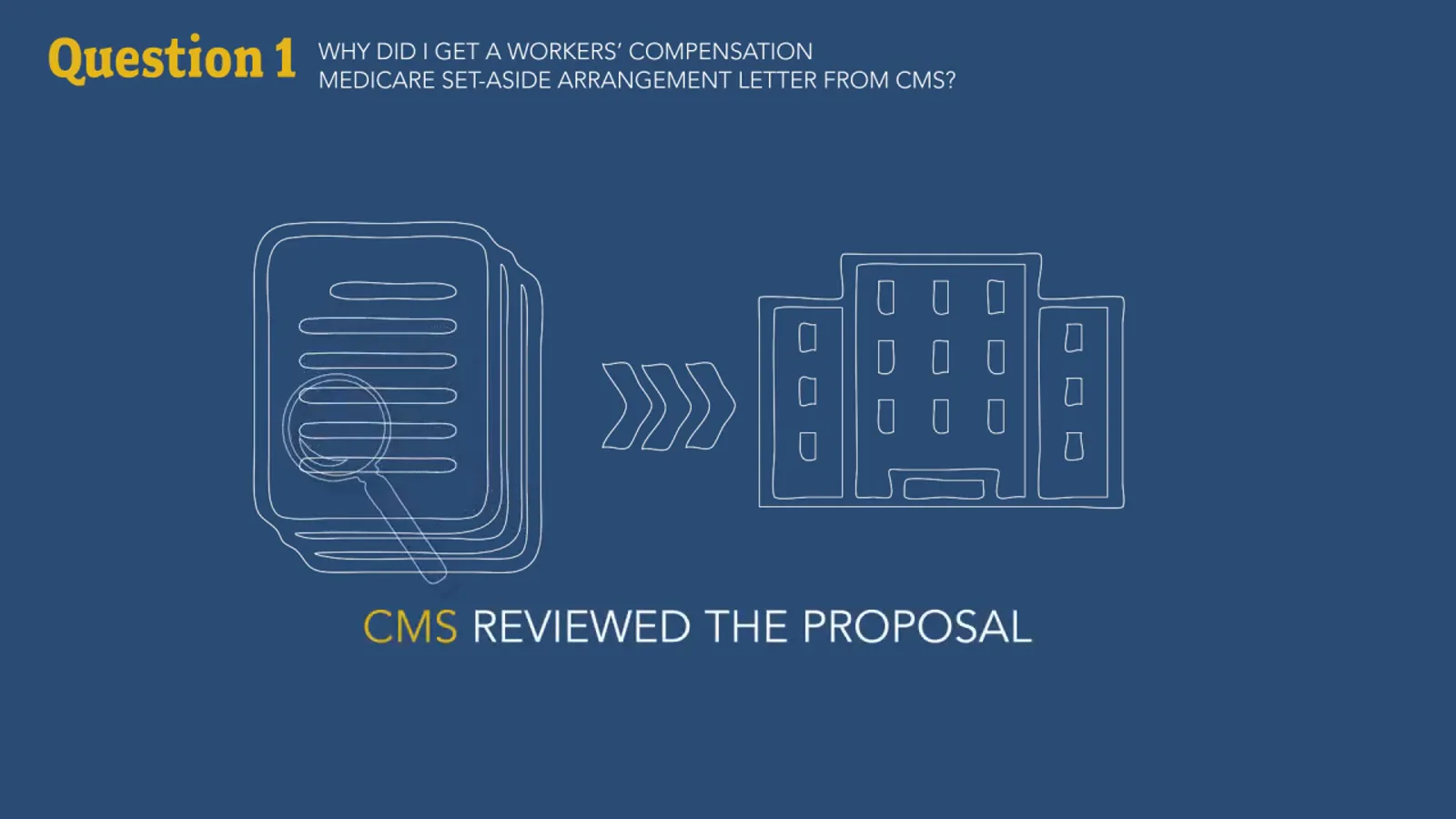
The review already happened — this letter is its result.Watch at 0:30 - 2
What a Medicare set-aside arrangement actually is
CMS defines the WCMSA as a financial arrangement: part of the settlement is reserved for future medical care, and after you can show that the CMS-approved amount was spent on that care, Medicare will pay for treatment and medications related to the settled work injury. It is not a benefit you are granted. It is money carved out of your own settlement and spent in a particular order, with records that have to hold up.
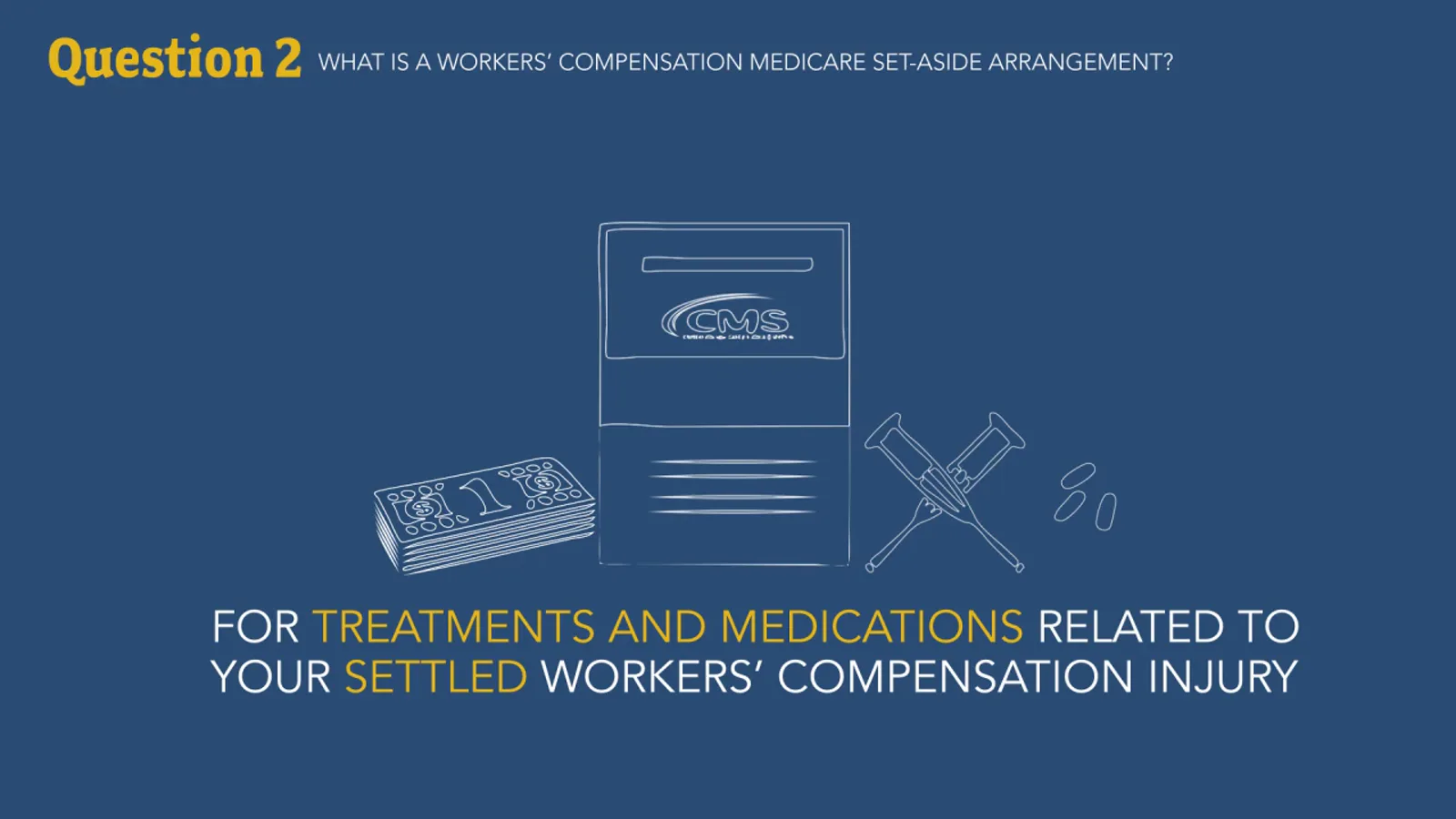
A slice of your own settlement with a Medicare rule attached.Watch at 0:50 - 3
CMS is not telling you to settle your claim
The source video answers this one flatly: no. Medicare is not directing you to settle, and the settlement itself is between you and the workers’ compensation carrier. CMS’s interest is narrower — making sure enough money sits inside the settlement to cover the future medical treatment and drugs you are likely to need, so Medicare does not end up paying costs the workers’ compensation system should carry.
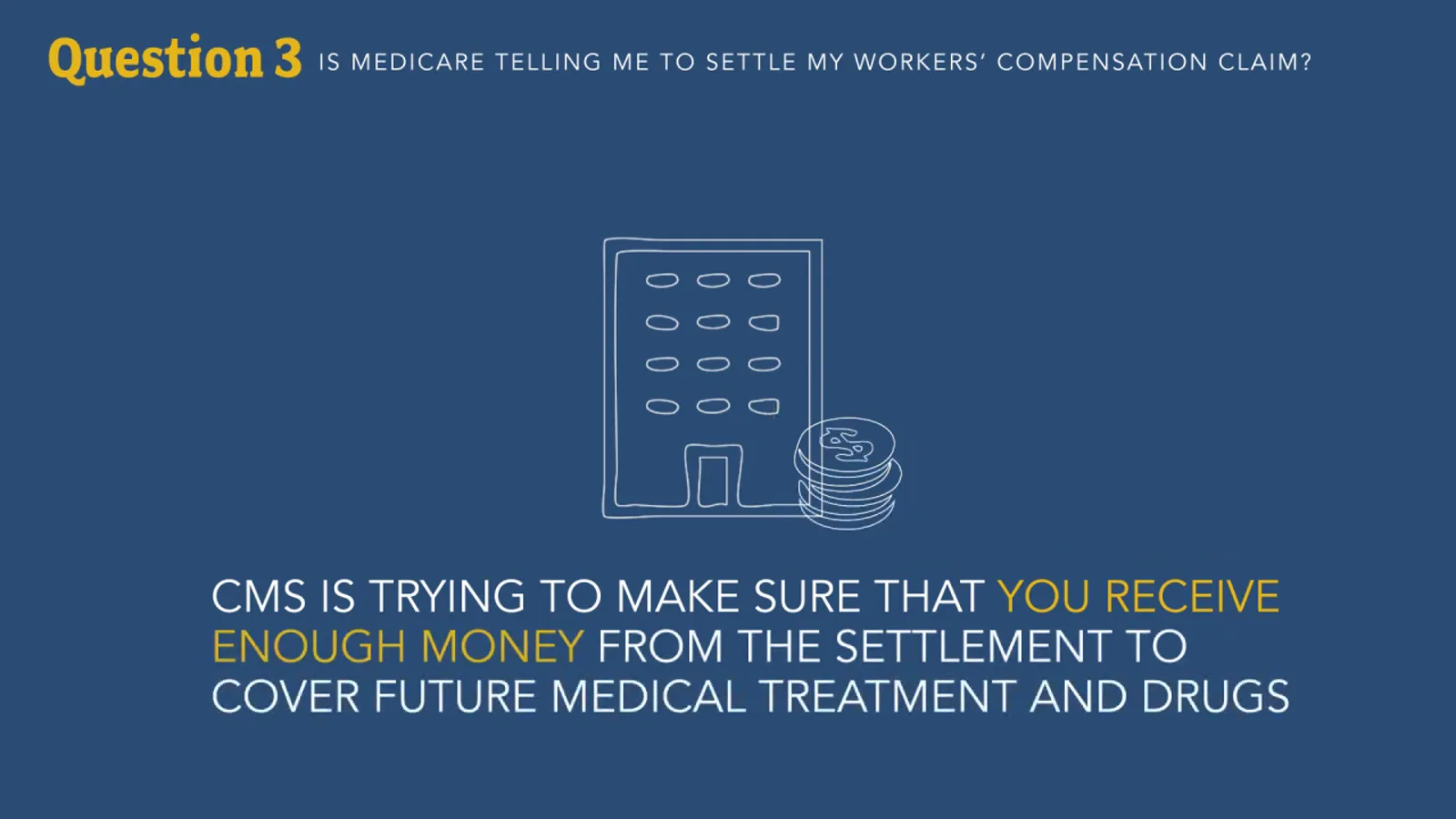
Nobody at CMS is ordering you to sign.Watch at 1:20 - 4
Only services Medicare would otherwise cover
Set-aside money is restricted by subject and by coverage. It pays for care connected to the settled work injury that Medicare would otherwise cover — doctor visits, hospital care, medications and similar services. The CMS Self-Administration Toolkit states the ceiling plainly: WCMSA funds may not be used for services that Medicare does not cover. Before you spend, the useful question is not “is this related to my injury?” but “would Medicare have paid for this at all?”
The same injury, judged by Medicare’s coverage rules.Watch at 1:42 - 5
Gym memberships and acupuncture fall on the wrong side of that line
Because the test is Medicare coverage, several things injured workers genuinely want — acupuncture, a gym membership, other therapies Medicare excludes — cannot be paid from the set-aside account. A clinic bill for the work injury is a different animal from a wellness expense. If you expect to be compensated for the non-covered items, the money has to come from somewhere else in the deal.

Helpful to you is not the same as covered by Medicare.Watch at 2:00 - 6
Negotiate a separate allotment before you sign
The video’s instruction is to raise those non-Medicare items before the case settles. A compromise and release fixes the total, and inserting an extra allotment afterwards is far harder than negotiating it while the number is still being discussed. Bring a written list of what you expect to need that Medicare will not cover, and give it to your attorney or the adjuster early — not the week the release is due to be signed.

Raise it while the total is still open.Watch at 2:08 - 7
The set-aside goes into a bank account in your name
The WCMSA portion is deposited into an account in your name and held apart from your ordinary checking or savings money. Keeping it separate is what lets you demonstrate, years later, that set-aside dollars went only to work-injury care. The toolkit tells claimants who administer their own account to keep a register of every deposit and payment, because Medicare may ask to see it as proof the account was used correctly.
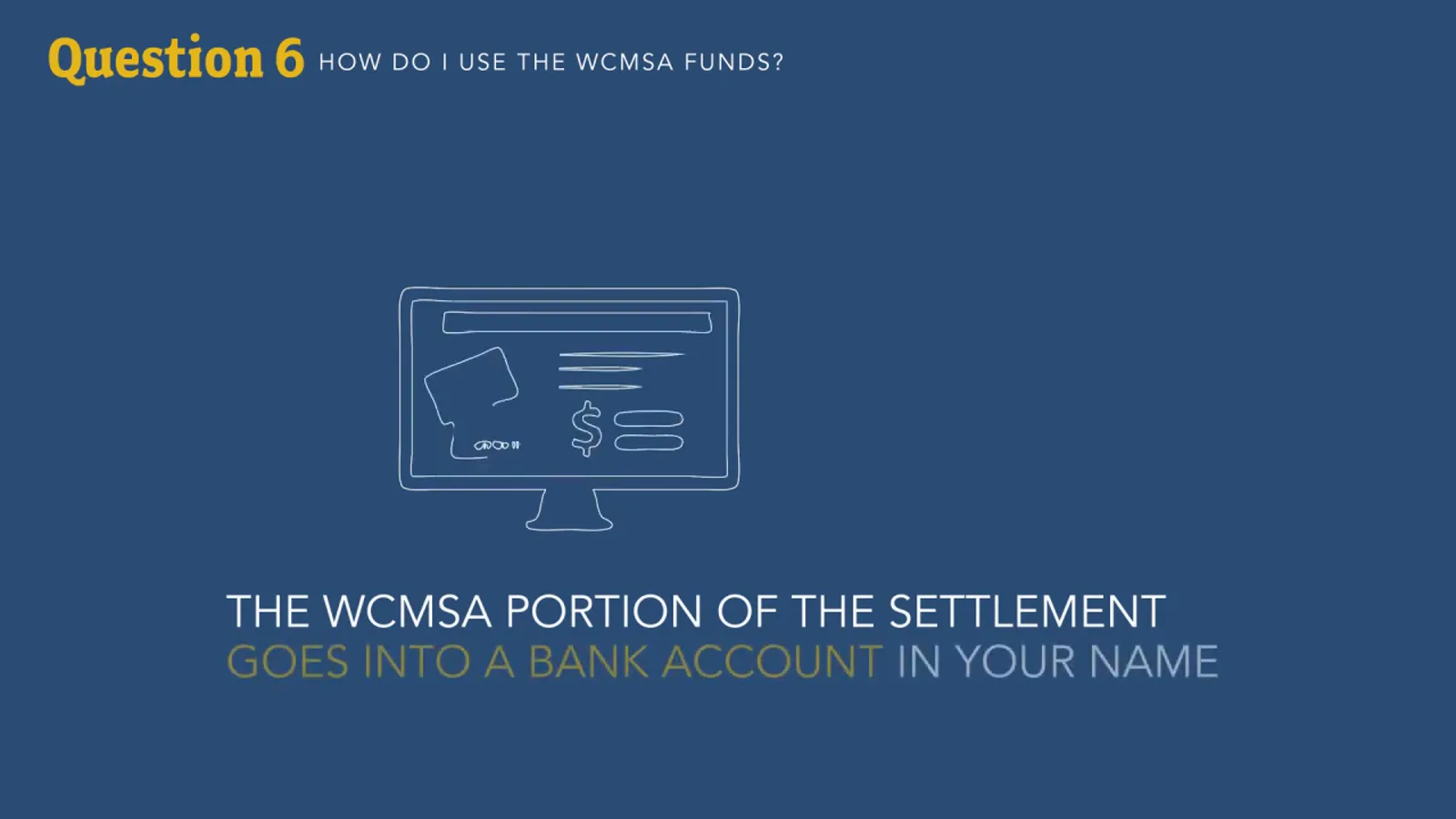
Separate account, separate paper trail.Watch at 2:20 - 8
You pay the doctors and pharmacies directly
Ask providers to bill you for work-injury care rather than sending the claim to Medicare, then pay those bills out of the set-aside account. The toolkit’s sequence: if you are not yet a Medicare beneficiary, pay all of your work-injury, Medicare-covered medical and prescription costs from the account; when you become a beneficiary, keep paying from the account until it is fully and appropriately exhausted. Keep receipts and a transaction record — the annual attestation is a signed statement that the money was used correctly, and you may have to back it up.
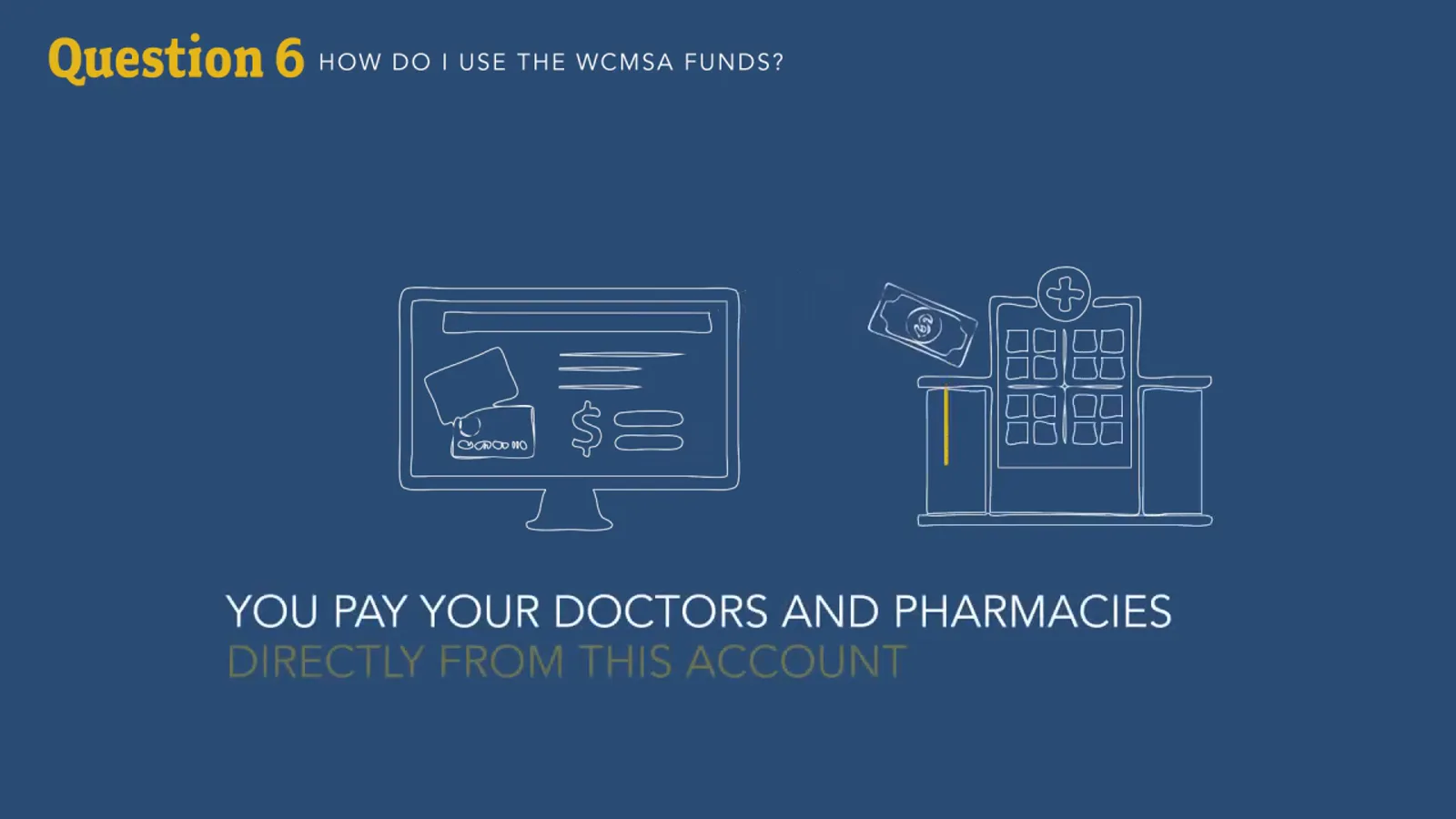
Have the provider bill you, then pay from the account.Watch at 2:26 - 9
CMS and Medicare never send you the set-aside money
This is a common misunderstanding, so the video demonstrates it: CMS and Medicare do not issue the funds. The money comes from the workers’ compensation insurance carrier as part of your settlement, and no federal check is deposited into the account. If the settlement itself has stalled, the video points claimants back to their attorney or the workers’ compensation carrier to complete it — not to CMS.
The funds come from the carrier, not from the federal agency.Watch at 2:42 - 10
When the account is empty, tell CMS in writing
An account with nothing left and no future deposit is permanently exhausted. The CMS toolkit asks for a final attestation letter within 60 days of the date the account is depleted, stating in the letter that the account is “completely exhausted”. Until that letter is received and documented, CMS continues to deny claims related to the work injury, so this mailing is what unlocks Medicare payment for the injury.

An empty account has to be announced, not assumed.Watch at 2:56 - 11
Where that letter goes: the BCRC
Attestation letters go to Medicare’s Benefits Coordination & Recovery Center — the NGHP address on screen, P.O. Box 138832, Oklahoma City, OK 73113. The toolkit says to mail yearly account attestations and expenditure letters there unless you are submitting them electronically through the WCMSA Portal or Medicare.gov. Keep a copy and note the date you mailed it: the date is what shows you met the deadline.

The NGHP post office box on the slide is where it goes.Watch at 3:12 - 12
Medicare pays only after it verifies how the money was spent
The video’s answer is conditional: Medicare starts paying for future treatment related to the work injury after it can verify the WCMSA money was spent appropriately. For a structured set-aside, funded by periodic deposits, Medicare coverage for the injury continues while the account is being replenished between deposits. What turns a routine exhaustion letter into an argument is a record that does not line up — set-aside dollars on non-covered items, or payments nothing can document.
Spent correctly is the condition — not merely spent.Watch at 3:24 - 13
What happens to leftover money if you die before it is spent
The video describes two common outcomes: some settlements allow your estate to retain whatever is left, while others require the balance to be returned to the workers’ compensation insurance carrier — which is exactly why the point should be negotiated before the final settlement. The CMS toolkit adds the mechanics: someone should notify the BCRC if death occurs before the account is permanently exhausted, bills tied to the claim are paid first, and any remainder may then be paid out according to state law once Medicare’s interests are protected. Providers can submit their first bill to Medicare up to 12 months after the date of service, so the account may stay open for a while after a death.
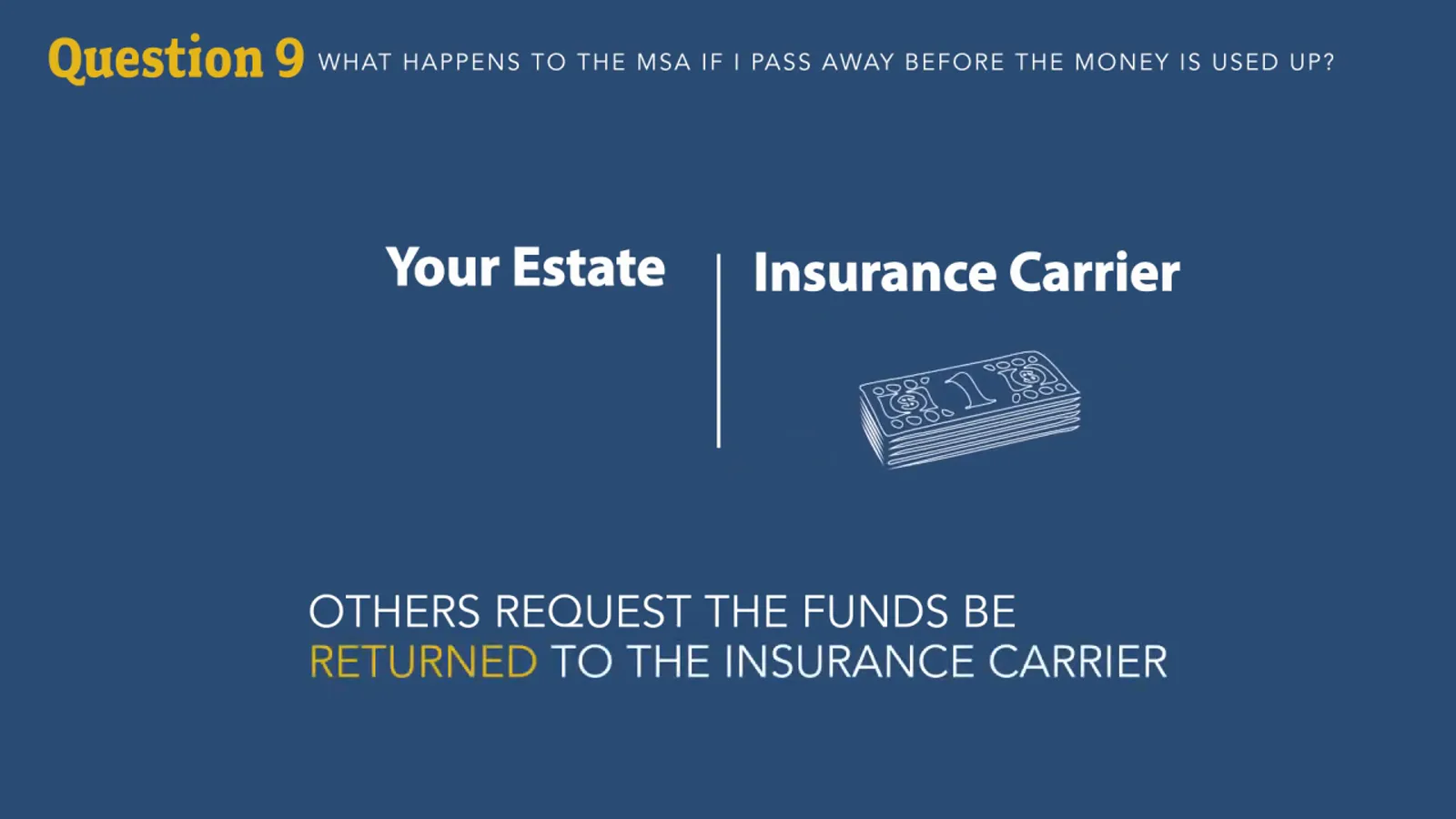
Estate or carrier — the settlement wording decides.Watch at 3:54 - 14
The annual attestation, every year until the account is used up
Until the account is permanently exhausted, you owe Medicare a yearly statement that the funds were used correctly. The toolkit sets the deadline: no later than 30 days after the anniversary date of your workers’ compensation settlement, signed and dated with a witness. The frame in the source video is the same instruction in a single line — fill out the annual attestation form and mail it to the BCRC. Electronic submission through the WCMSA Portal or Medicare.gov replaces the mailing.
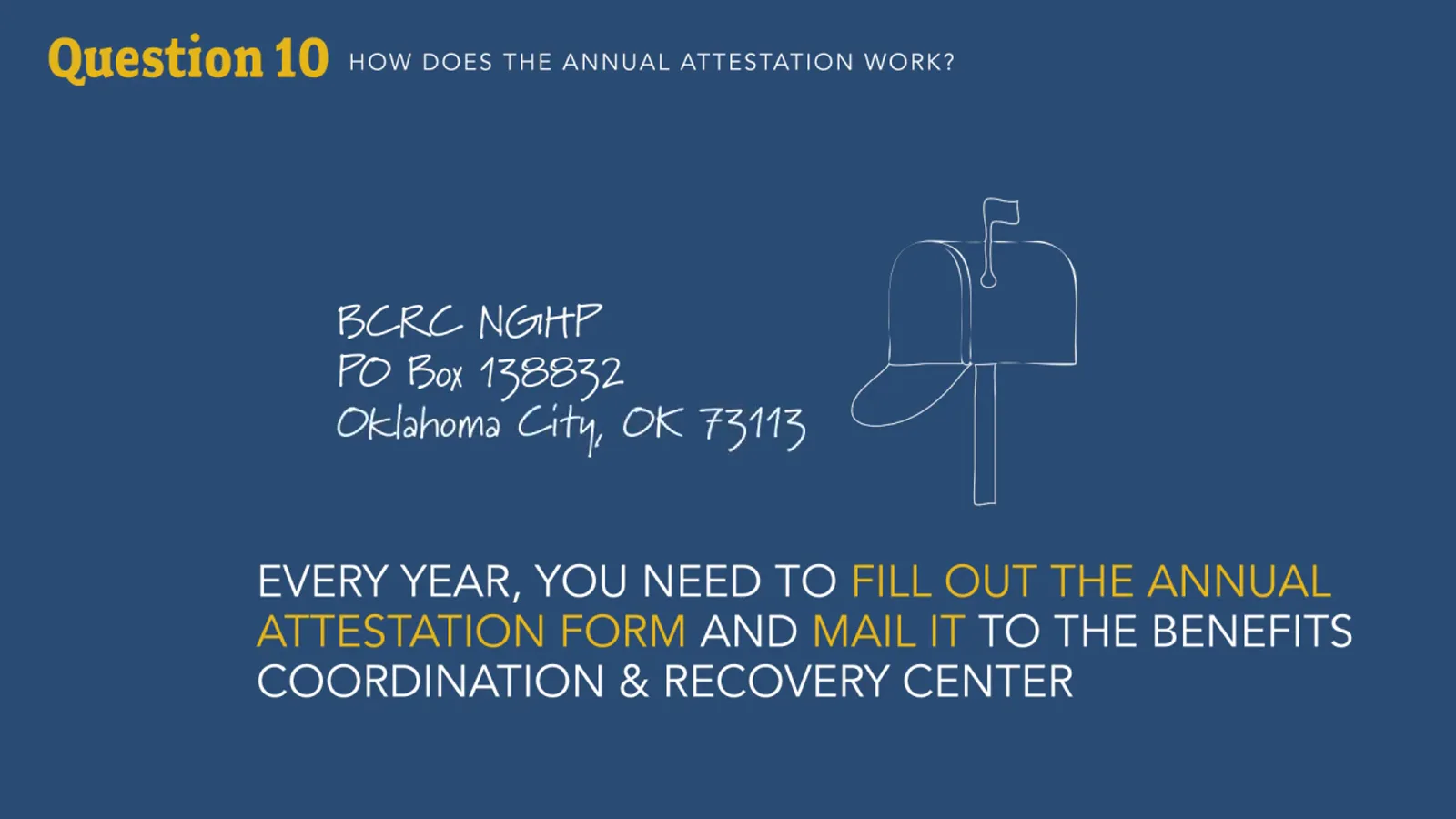
One form a year, by mail or filed online.Watch at 4:24
Frequently asked questions
- Does a letter from CMS about a Medicare set-aside mean Medicare is forcing me to settle?
- No. CMS does not direct the settlement — that decision belongs to you and the workers’ compensation carrier, as the source video states outright. The agency reviews the WCMSA proposal the carrier submitted to make sure the amount reserved for your future work-injury treatment and medications is adequate to protect Medicare’s financial interests. A letter reporting that review is not an instruction to sign, and it is not a demand for payment.
- Can I spend set-aside money on anything my injury needs?
- No. Two limits apply at once: the expense has to relate to the settled work injury, and Medicare has to cover that kind of service. The CMS Self-Administration Toolkit puts it directly — WCMSA funds may not be used for services Medicare does not cover, so acupuncture, a gym membership and similar excluded items cannot come out of the account. If you want to be compensated for them, they have to be negotiated as a separate part of the settlement before you sign.
- What do I do when the set-aside account is empty?
- Tell Medicare in writing. A lump-sum account with no money left and no future deposit is permanently exhausted, and the toolkit asks for a final attestation letter within 60 days of the depletion date, stating that the account is completely exhausted. Until that letter is received and documented, CMS continues to deny work-injury claims, so the mailing is what allows Medicare to start paying for the injury. With a structured account funded by periodic deposits, running out between deposits is temporary exhaustion instead — report it, and Medicare coverage of the injury continues while the account is replenished.
- Who actually funds the account, and who pays after it is exhausted?
- The workers’ compensation insurance carrier funds it, as part of the settlement. CMS and Medicare do not issue the money, which is why the source video stops on that point: no federal check arrives for a set-aside. After the account is properly exhausted and the final attestation is documented, Medicare can pay for treatment related to the settled work injury. If the settlement itself has not been completed, the video tells claimants to contact their attorney or the workers’ compensation carrier rather than CMS.
- How often do I have to report on the account, and by when?
- Once a year, until the account is permanently exhausted. The CMS toolkit sets the deadline: no later than 30 days after the anniversary date of your workers’ compensation settlement, you send an attestation to the Benefits Coordination & Recovery Center stating that the funds were used correctly. You and a witness sign and date it. Mail goes to NGHP P.O. Box 138832, Oklahoma City, OK 73113, unless you file electronically through the WCMSA Portal or Medicare.gov.
- What happens to money left in the account if I die?
- It depends on how the settlement was written. The source video describes settlements that let the estate retain the remaining funds and others that require the balance to be returned to the workers’ compensation carrier, which is why the point should be settled before the final agreement. The toolkit adds the steps: notify the BCRC if death occurs before the account is permanently exhausted, pay the bills tied to the claim first, and any remainder may then be paid out under state law once Medicare’s interests are protected. Because providers can first bill Medicare up to 12 months after the date of service, the account may remain open for a while.
Keep reading
Educational information only, not legal advice. A Medicare set-aside is negotiated inside your own settlement and administered under CMS rules; the amount, your state’s law and the wording of your agreement all change the outcome. Confirm what applies to your claim with your attorney, your claims administrator or the Benefits Coordination & Recovery Center before you sign anything or spend from the account.